.svg)



Plastikbeutel sind nach wie vor das dominierende Verpackungsformat in der Modeindustrie, mit geschätzten 180 Milliarden Einheiten, die jährlich zum Schutz und Transport von Bekleidungsprodukten verwendet werden. Die meisten dieser Beutel sind für den einmaligen Gebrauch konzipiert und haben eine geringe Recyclingquote.
Da Modemarken mit zunehmendem regulatorischem Druck und wachsenden Erwartungen der Verbraucher an die Nachhaltigkeit konfrontiert sind, suchen viele nach Alternativen zu Kunststoffverpackungen.
Vela™ wurde entwickelt, um Modemarken dabei zu unterstützen, Plastikbeutel durch Papier zu ersetzen, ohne dabei den Produktschutz zu beeinträchtigen und gleichzeitig das Kundenerlebnis zu verbessern. Seit der Markteinführung wurden mehr als 300 Millionen Vela-Papiertüten in den Markt gebracht, die Marken bei der Abkehr von Plastik unterstützen.
Doch eine wichtige Frage blieb offen: Wie nehmen Verbraucher Papierverpackungen im Vergleich zu Plastik tatsächlich wahr und beeinflusst das Verpackungsmaterial die Markenwahrnehmung?
Um diese Dynamiken besser zu verstehen, Vela arbeitete mit dem Accelerated Marketing Insights Team von Quad zusammen unabhängige Verhaltensforschung zur Wahrnehmung von Verpackungen während des Auspackerlebnisses durchzuführen.

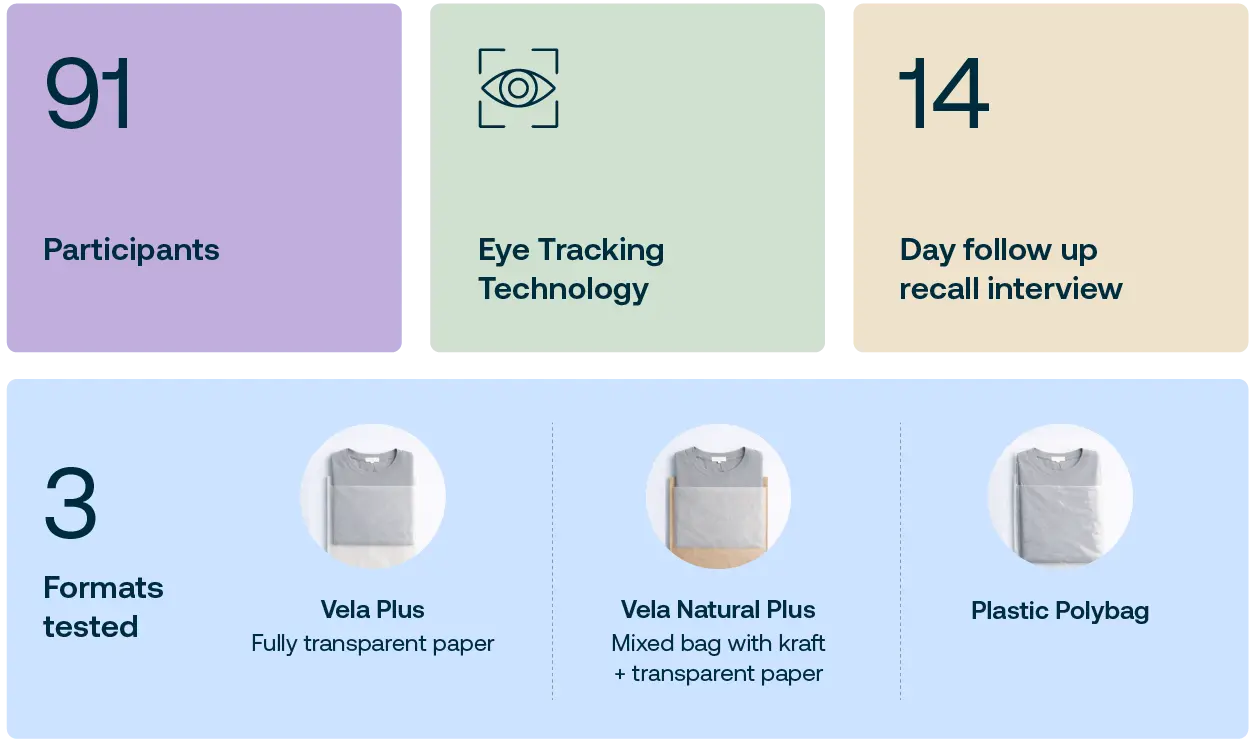
Die Studie simulierte ein realistisches Erlebnis bei der Lieferung von Bekleidung nach Hause. Teilnehmer der Generation Z und der Millennials erhielten ein T-Shirt, das in einem von drei Formaten verpackt war:
Die Forscher setzten verschiedene Instrumente zur Verhaltensmessung ein:
Dieser Ansatz ermöglichte es den Forschern, sowohl die geäußerten Präferenzen als auch die tatsächlichen Verhaltensreaktionen auf Verpackungsmaterialien zu messen.
Die Untersuchung zeigt ein klares und konsistentes Muster: Verpackungsmaterial hat einen direkten Einfluss darauf, wie Verbraucher eine Marke wahrnehmen, mit ihr interagieren und sie bewerten.
Über alle Phasen des Auspackerlebnisses hinweg schnitt Papierverpackung besser ab als Kunststoff – nicht nur in Bezug auf die Wahrnehmung der Nachhaltigkeit, sondern auch bei Aufmerksamkeit, Interaktion und Markenassoziation.
79 % der Verbraucher bevorzugten Papierverpackungen gegenüber Kunststoff, was einen starken und wachsenden Wandel in den Erwartungen der Verbraucher bestätigt.
Kernekenntnisse aus der Studie sind:
- Papierverpackungen steigern die Interaktion und erzeugen beim Auspacken bis zu 60 % mehr visuelle Aufmerksamkeit
- Die Wahrnehmung der Nachhaltigkeit ist deutlich höher; Papier wird als bis zu zweimal nachhaltiger wahrgenommen als Kunststoff
- Die Assoziation mit umweltfreundlichen Marken verbessert sich, wobei 77 % der Teilnehmer Papierverpackungen mit verantwortungsbewussten Marken verbinden
- Die Wahrnehmung von Wertigkeit wird gesteigert, da Papierformate häufiger mit hochwertigeren und durchdachteren Marken in Verbindung gebracht werden
Diese Ergebnisse zeigen, dass Verpackungen kein neutrales Element mehr sind. Sie sind ein sichtbarer und einflussreicher Teil des Markenerlebnisses.
.webp)
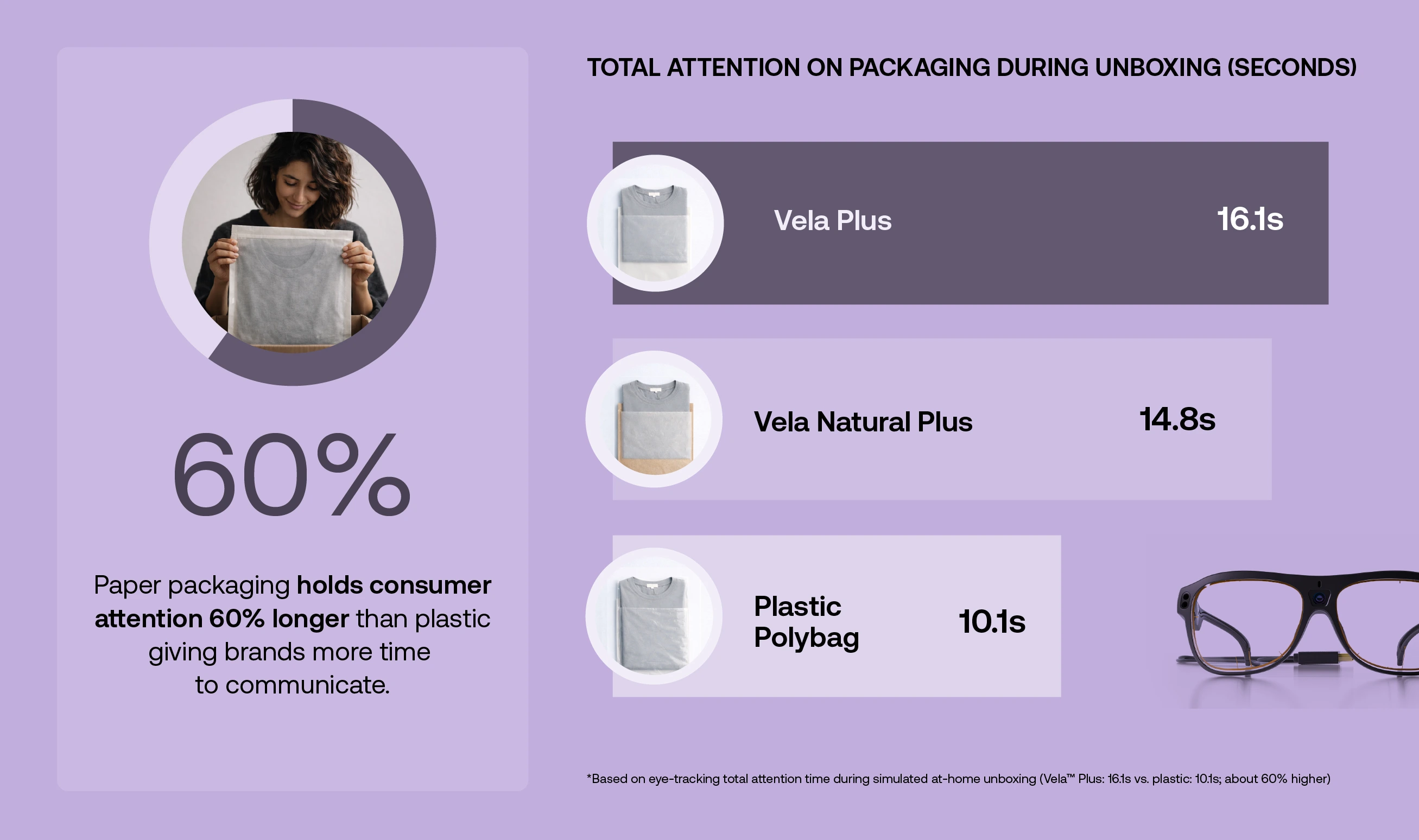
Die Eye-Tracking-Analyse zeigte, dass die Materialwahl einen erheblichen Einfluss darauf hat, wie lange sich Verbraucher während des Auspackens mit der Verpackung beschäftigen.
Durchschnittliche visuelle Gesamtaufmerksamkeit auf die Verpackung:
Praktisch gesehen erzeugte Papierverpackung bis zu 60 % mehr Engagement als herkömmliche Kunststoffverpackungen. Dieses verlängerte Aufmerksamkeitsfenster verwandelt die Verpackung von einem funktionalen Element in eine Gelegenheit für Storytelling und Markeninteraktion.
Die Materialwahl beeinflusste maßgeblich, wie die Teilnehmer die ökologische Verantwortung der Marke wahrnahmen.
In der Studie:
Kunststoff-Polybeutel wurden durchweg als die am wenigsten umweltverträgliche Option wahrgenommen.
Verbraucher suchten aktiv nach Hinweisen zur Nachhaltigkeit, wenn sie mit Papierverpackungen interagierten. Die Eye-Tracking-Analyse zeigte, dass ein großer Teil der visuellen Aufmerksamkeit auf Nachhaltigkeitsbotschaften und Materialsymbole auf der Verpackung gerichtet war.
Zu den wichtigsten Ergebnissen gehören:
Diese Ergebnisse legen nahe, dass Verbraucher Nachhaltigkeitsinformationen nicht nur wahrnehmen, sondern sich auch daran erinnern, wenn sie klar kommuniziert werden.
Über die Nachhaltigkeit hinaus zeigt die Studie einen klaren und messbaren Einfluss auf die Markenwahrnehmung. Das Verpackungsmaterial prägt das Bild direkt und beeinflusst, wie Verbraucher Qualität, Verantwortung und die Positionierung einer Marke interpretieren.
Die Teilnehmer beschrieben Papierverpackungen durchweg als durchdachter, hochwertiger und besser auf verantwortungsbewusste Marken abgestimmt.
Zusammenfassend:
- 79 % der Verbraucher bevorzugen Papierverpackungen gegenüber Kunststoff
- Papierverpackungen erzielen eine bis zu 2-mal höhere wahrgenommene Nachhaltigkeit
- 77 % assoziieren Papierverpackungen mit einem umweltfreundlichen Markenimage (gegenüber 34 % bei Kunststoff)
Diese Ergebnisse zeigen, dass die Materialwahl nicht nur eine funktionale Entscheidung ist. Sie ist ein strategischer Hebel, um die Wahrnehmung von Nachhaltigkeit zu verbessern und die Premium-Positionierung der Marke zu stärken.

Die Untersuchung verdeutlicht, wie Verpackungsmaterial sowohl die Wahrnehmung als auch das Verhalten prägen kann. Der Wechsel von Kunststoff zu Papier reduziert nicht nur die Umweltbelastung, sondern kann auch das Markenerlebnis und die Interpretation der Marke durch die Verbraucher stärken.
Für Modemarken kann Papierverpackung mehrere strategische Vorteile bieten:

Da die Erwartungen an Nachhaltigkeit stetig wachsen, ist die Verpackung längst keine rein operative Entscheidung mehr. Sie ist zu einem festen Bestandteil des Markenerlebnisses geworden.
Beispiele für Marken, die diesen Wandel bereits vollziehen, finden Sie in unseren Vela-Fallstudien, zusammen mit weiteren Informationen zur Vela-Verpackungsplattform und ihrem Ansatz für verantwortungsvolle Verpackungen.
Erfahren Sie, wie Marken Polybags durch Vela ersetzen
• Fashion for Good & Boston Consulting Group – The Plastics Problem in Fashion (2019)
• Quad – Accelerated Marketing Insights (Seaman Paper Behavioural Study, 2026)
Bleiben Sie auf dem Laufenden mit Expertenwissen zu Verpackungen für die Bekleidungsindustrie, Nachhaltigkeit, Branchentrends, gesetzlichen Bestimmungen und Produktinnovationen.
SHARE THIS ARTICLE:


Lassen Sie uns darüber sprechen, wie Vela™ Sie bei Ihren Zielen unterstützen kann.


Füllen Sie das Formular aus und einer unserer Vertriebsmitarbeiter in Ihrer Region wird sich innerhalb von 72 Stunden bei Ihnen melden.