.svg)



Plastic polybags remain the dominant packaging format in the fashion industry, with an estimated 180 billion units used annually to protect and transport apparel products. Most of these bags are designed for single use and have low recycling rates.
As fashion brands face increasing regulatory pressure and growing consumer expectations around sustainability, many are exploring alternatives to plastic packaging.
Vela™ was created to help fashion brands replace plastic polybags with paper while maintaining product protection and improving the customer experience. Since launch, more than 300 million Vela paper bags have entered the market, supporting brands in their transition away from plastic.
But an important question remained: how do consumers actually perceive paper packaging compared with plastic, and does packaging material influence brand perception?
To better understand these dynamics, Vela partnered with Quad’s Accelerated Marketing Insights team to conduct independent behavioral research focused on packaging perception during the unboxing experience.

The study simulated a realistic at-home apparel delivery experience. Gen Z and Millennial participants received a T-shirt packaged in one of three formats:
Researchers used several behavioral measurement tools:
This approach allowed researchers to measure both stated preferences and real behavioral responses to packaging materials.
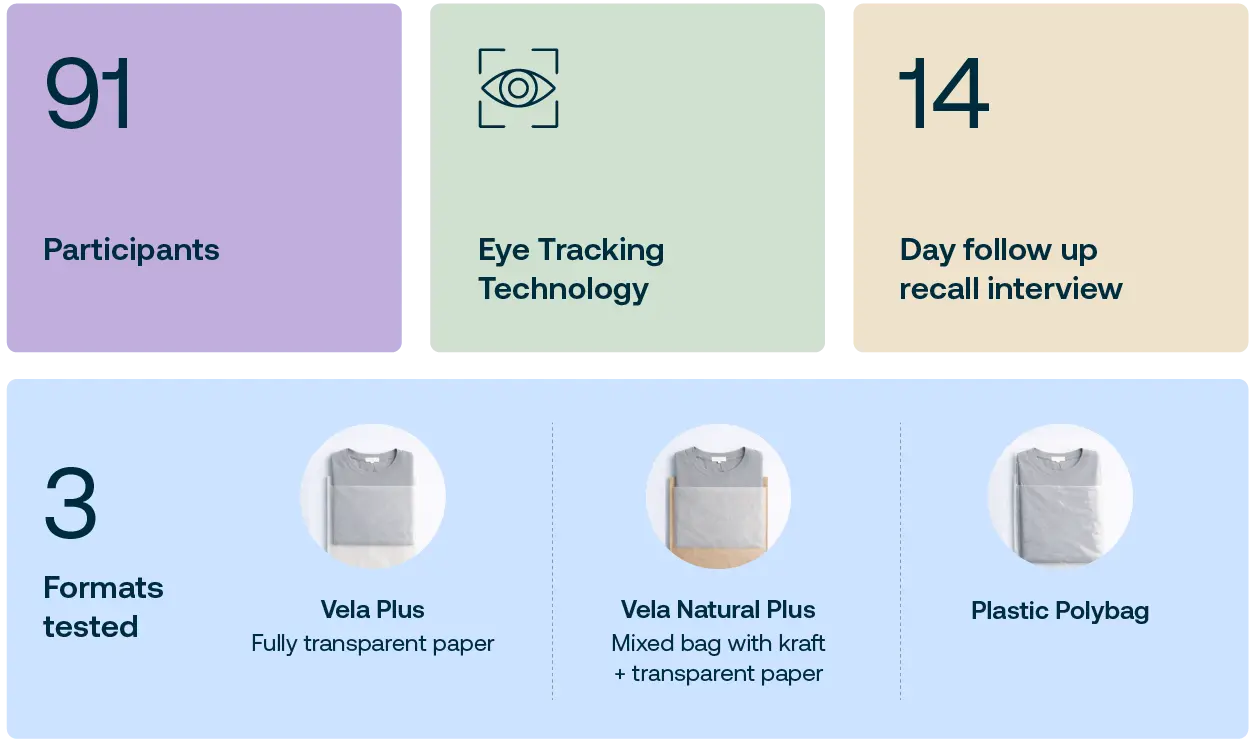
The research reveals a clear and consistent pattern: packaging material has a direct impact on how consumers perceive, engage with, and evaluate a brand.
Across all stages of the unboxing experience, paper packaging outperformed plastic, not only in terms of sustainability perception, but also in attention, engagement, and brand association.
79% of consumers preferred paper packaging over plastic, confirming a strong and growing shift in consumer expectations.
Key insights from the study include:
- Paper packaging increases engagement, generating up to 60% more visual attention during unboxing
- Sustainability perception is significantly higher, with paper delivering up to 2x stronger perceived sustainability vs plastic
- Eco-friendly brand association improves, with 77% of participants linking paper packaging to responsible brands
- Premium perception is enhanced, with paper formats more frequently associated with higher-end and more thoughtful brands
These findings demonstrate that packaging is no longer a neutral element. It is a visible and influential part of the brand experience.
.webp)
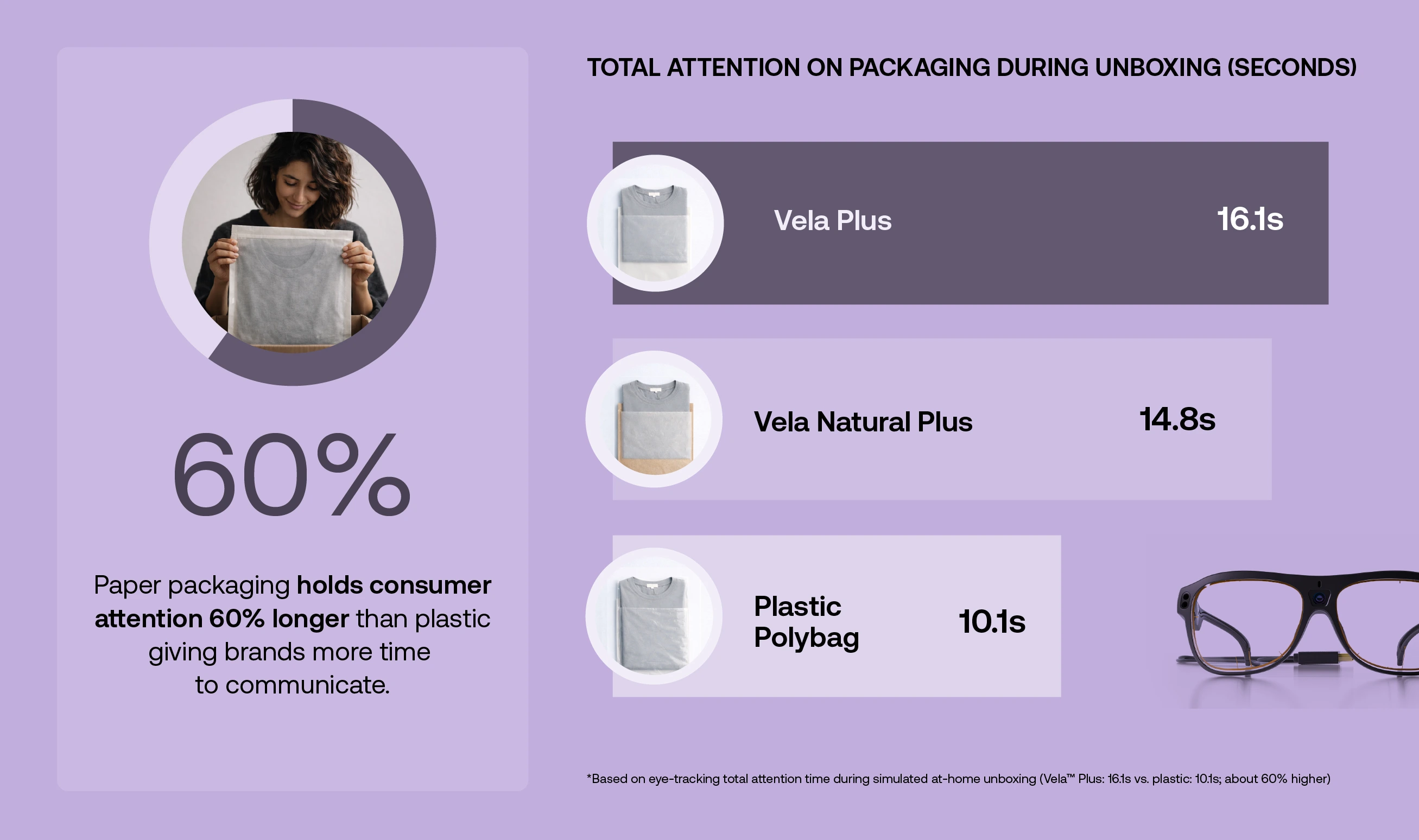
Eye-tracking analysis showed that material choice significantly affects how long consumers interact with packaging during the unboxing moment.
Average total visual attention on the package:
In practical terms, paper packaging generated up to 60% more engagement than traditional plastic packaging. This extended attention window transforms packaging from a functional element into an opportunity for storytelling and brand interaction.
Material choice strongly influenced how participants perceived the environmental responsibility of the brand.
In the study:
Plastic polybags were consistently perceived as the least environmentally responsible option.
Consumers actively searched for sustainability cues when interacting with paper packaging. Eye-tracking analysis showed that a large share of visual attention was directed toward sustainability messaging and material icons printed on the package.
Key findings include:
These findings suggest that when sustainability information is clearly communicated, consumers not only notice it but remember it.
Beyond sustainability, the research reveals a clear and measurable impact on how brands are perceived. Packaging material directly shapes perception, influencing how consumers interpret quality, responsibility, and brand positioning.
Participants consistently described paper packaging as more thoughtful, more premium, and better aligned with responsible brands.
Overall:
- 79% of consumers prefer paper packaging over plastic
- Paper packaging delivers up to 2× higher perceived sustainability
- 77% associate paper packaging with an eco-friendly brand image (vs. 34% for plastic)
These results show that material choice is not just a functional decision. It is a strategic lever to enhance sustainability perception and strengthen premium brand positioning.

The research highlights how packaging material can shape both perception and behavior. Moving from plastic to paper does more than reduce environmental impact; it can also strengthen how consumers experience and interpret the brand.
For fashion brands, paper packaging can deliver several strategic benefits:

As sustainability expectations continue to evolve, packaging is no longer just an operational decision. It has become an integral part of the brand experience.
Examples of brands already making this transition can be seen in Vela case studies, together with more information about the Vela packaging platform and its approach to responsible packaging.
See how brands are replacing polybags with Vela
• Fashion for Good & Boston Consulting Group – The Plastics Problem in Fashion (2019)
• Quad – Accelerated Marketing Insights (Seaman Paper Behavioural Study, 2026)
Stay informed with expert insights on apparel packaging, sustainability, industry trends, regulations and product innovation.
SHARE THIS ARTICLE:


Let’s talk about how Vela™ can support your goals.


Fill out the form and one of our sales representatives in your region will get back to you within 72 hours.