.svg)

The global fashion industry is entering a decisive phase of transformation. What was once treated as a niche conversation around sustainability has rapidly evolved into a strategic issue for brands, manufacturers and retailers across the apparel sector.
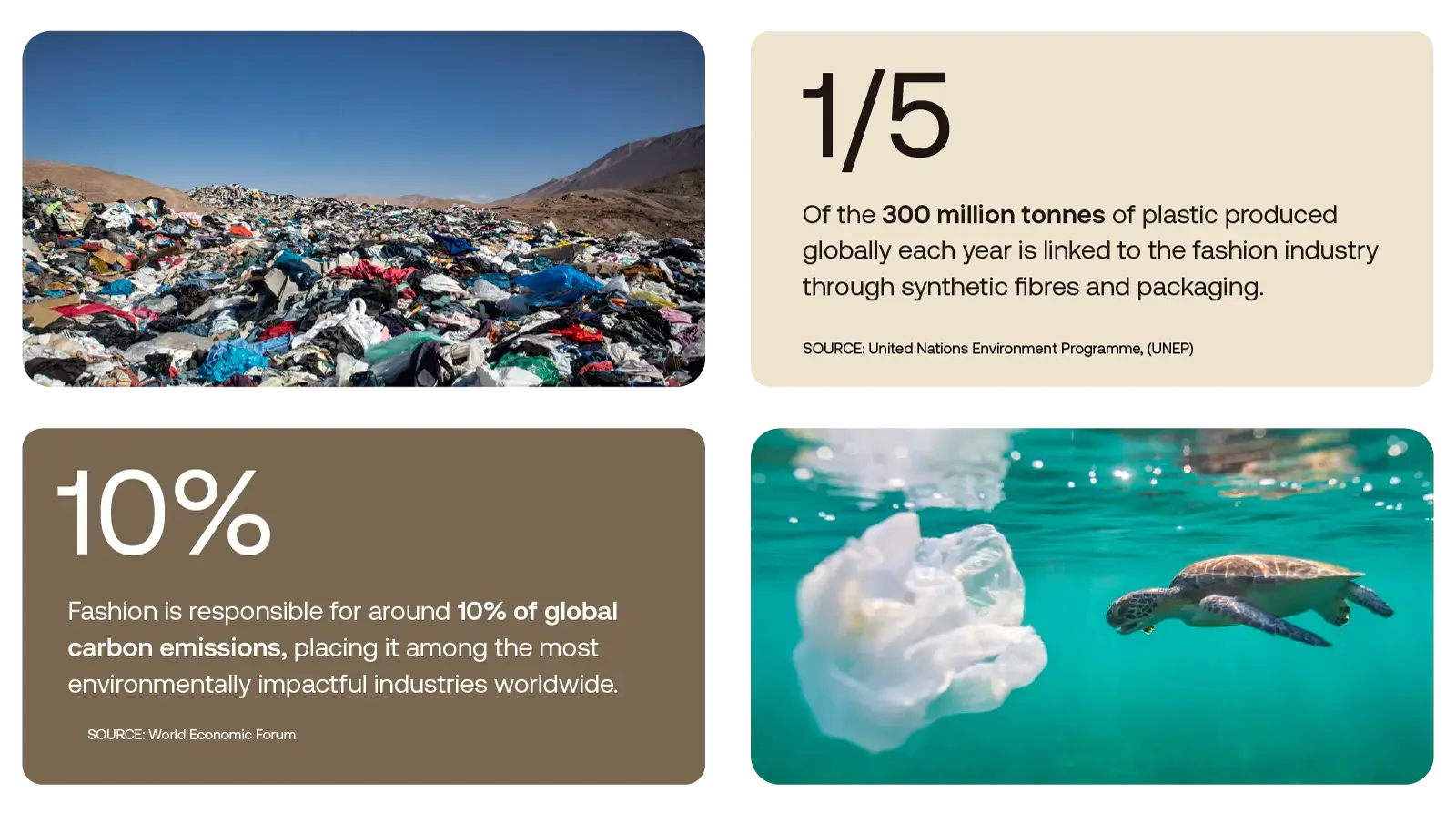
According to recent industry analysis, fashion is responsible for around 10% of global carbon emissions and contributes significantly to plastic pollution across global supply chains. The sector is also linked to nearly one-fifth of the 300 million tonnes of plastic produced globally each year, highlighting the scale of its environmental footprint.
These figures place fashion among the most environmentally impactful industries — with emissions estimated to exceed those produced by international aviation and shipping combined.
As a result, sustainability is shifting from a niche narrative to a defining factor for brands navigating a rapidly changing market.
For many years sustainability in fashion was framed primarily as a differentiating brand value. Companies could highlight responsible sourcing or ethical materials as part of their brand narrative. Today that dynamic is shifting.
Consumer expectations are evolving rapidly, particularly among younger generations. Research exploring the growth of eco-friendly fashion brands gaining momentum shows that many Millennials and Gen Z consumers increasingly prioritise responsible consumption and are more likely to buy second-hand clothing or choose brands that demonstrate credible environmental commitments.
Retail analysis examining the rise of sustainable fashion trends shaping the industry suggests that brands that fail to adapt risk falling behind as regulators and consumers demand more transparent and responsible supply chains.
Sustainability is therefore moving from brand storytelling to competitive necessity.
Despite the scale of the challenge, innovation across the fashion ecosystem is accelerating. Designers and manufacturers are experimenting with new materials, waste-reduction strategies and circular production models. Emerging approaches to zero-waste fashion production systems aim to minimise unused materials during manufacturing and significantly reduce the environmental footprint of garment production.
Material innovation is also advancing rapidly. Researchers and designers are exploring fibres derived from unexpected sources, including agricultural by-products. One example of this experimentation can be seen in developments around textiles made from recycled coffee grounds , demonstrating how unconventional materials can reduce environmental impact while opening new creative possibilities for fashion.
These developments highlight how sustainability is increasingly becoming a driver of experimentation and innovation across the industry.
The fashion industry is clearly moving toward a new model of responsibility. Circula business models such as resale platforms, rental services and garment repair are gaining momentum as companies seek to extend product lifecycles and reduce waste. At the same time, innovations in materials, supply-chain transparency and manufacturing processes are helping the industry move toward more sustainable production systems.
As this transformation continues, every component of the value chain is being reconsidered, including logistics and packaging. If fashion is to move toward more circular systems, the materials used to transport and protect garments must also evolve. Recyclable and responsibly sourced packaging, particularly paper based solutions designed for existing recycling infrastructures, is increasingly seen as one way brands can align their distribution systems with broader sustainability goals.
SHARE THIS ARTICLE:


Let’s talk about how Vela™ can support your goals.


Fill out the form and one of our sales representatives in your region will get back to you within 72 hours.